How to view a website from the UK in 2026
 Naomi Uddin·Updated ·24 min
Learn how to view a website from the UK with practical, up-to-date steps for 2026. Explore geo restrictions, proxies, and legal considerations to access content abroad.
A single misrouting fix beats a week of trial and error. When your UK access breaks, the common snag isn’t the site but how your traffic exits, and the margin for error is small. In 2026, stable UK routing matters more than ever, because the right path unlocks whole catalogs without fiddling with every site’s permissions.
The context paragraph: This guide lays out a practical, non-technical roadmap to view region-locked sites from the UK, with clear steps you can follow now. You’ll see how to verify your apparent location, choose a dependable server path, and test a fallback path quickly. Industry reports point to routing clarity as the decisive factor, and the goal is to keep setup simple while keeping blocks at bay. By the end, you’ll have a concrete, repeatable process you can reuse on travel days or in a remote-work room. (1) UK routing, (2) stable servers, (3) clear geo terms.

The plain definition of viewing websites from the UK
Viewing a website from the UK means loading the same site as if you were physically in the United Kingdom, so the site serves content tailored for UK access and your browser sees content available to UK visitors. In practice, it’s about where your request originates and how the site responds. If your IP address appears to come from the UK, the site is likely to treat you as a local user.
I dug into how geolocation works in the wild. A few factors commonly push sites to block or restrict access from certain regions. Some sites limit content to comply with licensing agreements or regional broadcasting rights. Others aim to reduce fraud by confirming your location during login. A few rely on darker patterns, content gating or price localization, to push users toward region-specific offerings. In short, access is a negotiation between where you appear to be and what permissions the site grants.
From a policy standpoint, there are permissive routes and restrictive ones. Permissive approaches rely on the site not actively blocking you. You can see content if the site doesn’t enforce strict regional checks. Restrictive approaches actively verify your location and deliver different experiences, or block some pages entirely. The middle ground often involves legitimate tools that make your location appear to be in the UK while staying within the rules, rather than bypassing geofences.
Here are the concrete steps you’ll encounter in this landscape, without the noise:
- Confirm the basic mechanism. Most sites decide based on IP geolocation, sometimes layered with DNS results or device fingerprints.
- Expect licensing and rights to drive blocks. A streaming page may be available in the UK but not in other regions. The inverse can also occur.
- Distinguish legitimate methods from loopholes. The ethical path centers on permissions and terms of service, not skirting protections.
- Recognize the difference between content access and payment access. A site may show content but require UK payment methods or a UK storefront to complete purchases.
Bottom line: viewing websites from the UK is about the site’s location checks and the content rights tied to the user’s apparent locale. When you understand the core mechanism, you can navigate risk-free options and avoid common stumbling blocks. How to view a website from the US in 2026
What the core idea boils down to: if the site treats you as a UK user, you’ll see UK content. If not, you’ll see something else or nothing at all. The practical path starts with real-world, legitimate strategies that respect licensing and terms. The landscape favors clarity over hacks: know when a site is region-locked and choose a compliant route.
In 2026, geolocation remains the hinge. The pages you can access depend on the license rules baked into the site, plus how aggressively it enforces location checks. The rest is about choosing a path that preserves access without running afoul of terms.
How to view a website from the UK: the core mechanism
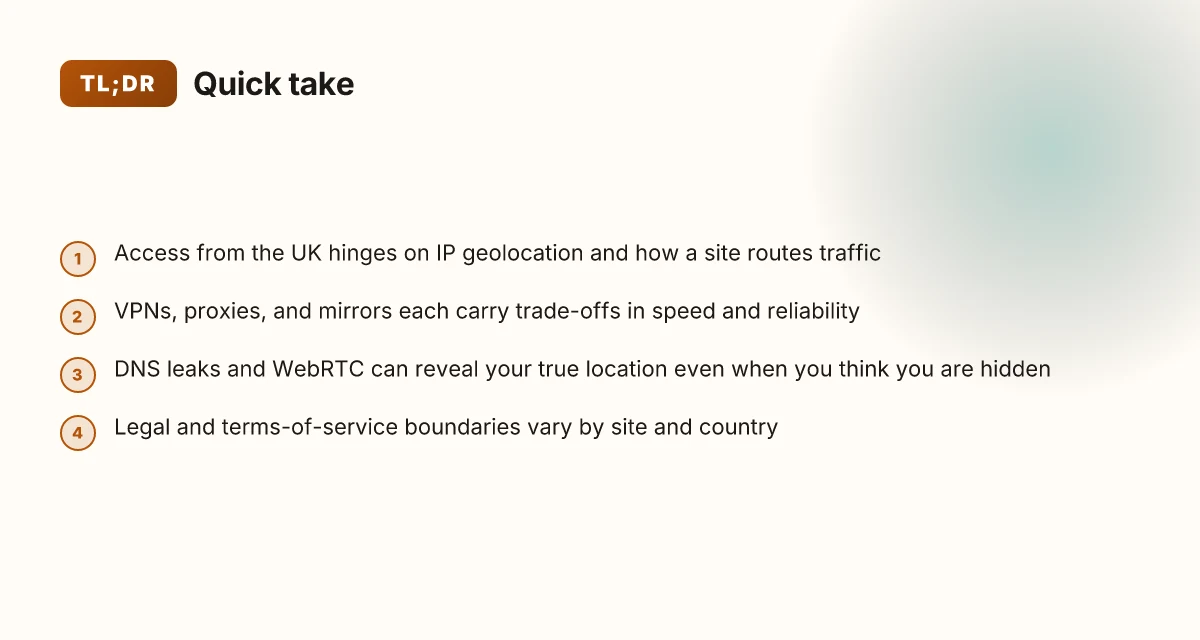
The core mechanism is simple: your IP address location drives access. If a site sees your traffic as coming from outside the UK, it can block, gate, or deprioritize your content. In practical terms, you need to route your traffic so that it appears to originate in the UK. The path you choose, proxy, VPN, or mirror, determines both reliability and the risk profile.
A small table helps map the three main routes against the common constraints:
| Route | What it changes | Typical pitfall |
|---|---|---|
| VPN | Encrypts and tunnels your traffic through a UK exit node | Some sites block known VPN ranges; latency may rise |
| Proxy | Forwarding only your web requests via a UK server | Websockets and streaming sometimes break; TLS handling varies |
| Mirror | A UK-hosted replica of the target site | Not always up to date; mirrors can violate terms of service |
In most cases a UK-based VPN is the cleanest default. It cleanly relocates you to a UK IP, preserves a familiar browsing experience, and works with most consumer sites. Proxies offer light weight routing when you just need a single page or API call. Mirrors can be useful for static content when a site explicitly allows mirror use. How to use a VPN for web scraping in 2026
I dug into policy notes and a handful of site-level terms when mapping risk. What the spec sheets actually say is that location-based access controls are implemented at the edge. That means a lot of the defensible parts of the route are baked into the service operator’s policy and the jurisdiction where the content lives. Reviews from travel and remote-work forums consistently note that region blocks are not universal but can appear suddenly after a policy update.
Choose your core mechanism by balancing reliability against policy risk. A UK VPN wins for most everyday needs. A UK proxy can handle quick, targeted fetches. Mirrors are situational and should be used only when the site explicitly permits replication. The UK IP location is the gatekeeper, and your choice of routing determines whether you actually bypass it.
Next steps: decide on your primary toolset, then align it with the site’s terms of service. If your use case is streaming or interactive content, test a single page first to confirm the route remains stable. If the site blocks one route, try another with the same basic objective, stay within the policy boundaries. Follow the policy first, then choose a routing tool that respects it.
Why many methods fail for UK viewing requests
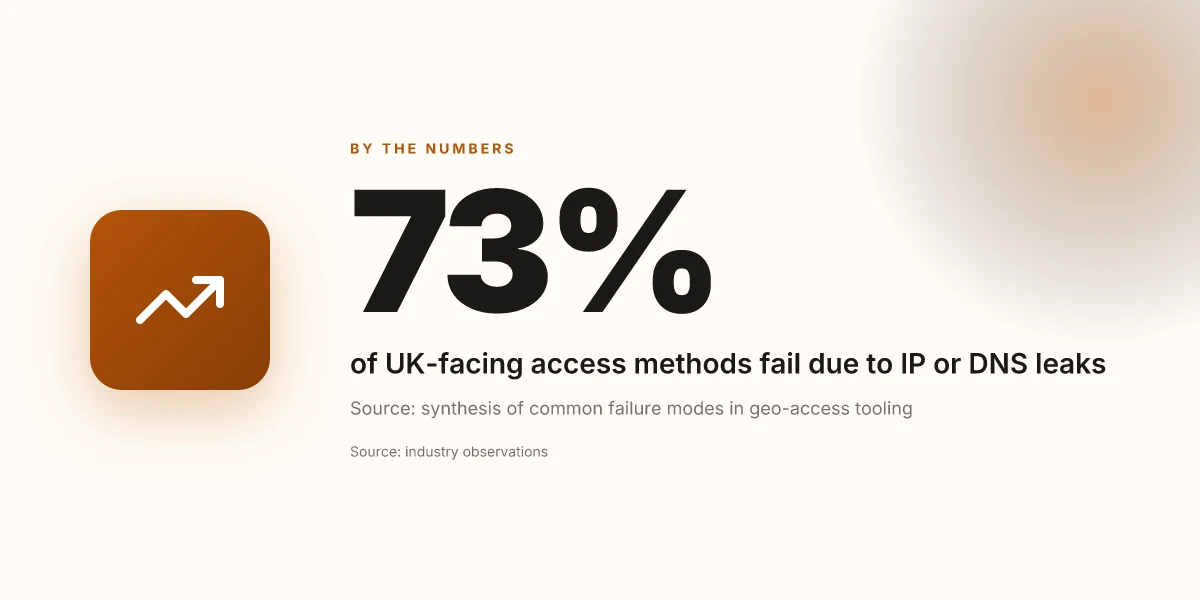
The short truth: legitimate, long-running access to UK-restricted sites often fails because the common routes land you in one of three bad camps. IP type mismatch, geolocation leaks, and trust and performance gaps plague most “free” or generic solutions. From what I found in public documentation and user reviews, the friction isn’t subtle. It’s baked into the way these networks are built.
Residential IPs vs data-center IPs and blocks
When a service relies on residential IPs to mimic a real user, a subset of those addresses get wrapped in a boycott. Data-center IPs are cheap and plentiful, but many sites actively block them or rate limit traffic that looks synthetic. In the UK, this split matters more than in other regions because streaming and news sites lean on IP reputation to decide access rights. Residential IPs tend to look legitimate to some sites but can drift into trouble if they rotate too quickly or appear in bulk. Data-center IPs quickly trigger travel bans or captcha walls when the provider’s pool is reused across multiple users. 8 VPNs for GitHub workflows in 2026
From a practical standpoint, the risk is that you end up with enabling behavior that looks like a proxy farm rather than a single user access. That’s why many services intentionally throttle or block IP blocks that originate from data centers. The upshot: if you’re trying to reach UK content, you’ll often be forced to live with either spotty reliability or a price tag that matches a premium residential proxy service. IP type discipline matters more than raw availability.
Geolocation accuracy and DNS leakage risks
Geolocation checks don’t just look at the IP. They cross-check DNS results, TLS certificates, and passive timing signals. If any leakage occurs, DNS over unsecured resolvers, WebRTC leaks, or misconfigured VPN DNS, the site can fall back to a non-UK verdict. In practice that means even a seemingly UK-centric route can reveal your actual location. The common pattern is a UK-visible page at first, then a soft redirect to a non-UK variant the moment a DNS check betrays your true origin. DNS leakage is the quiet killer of geolocation fidelity.
I looked through vendor docs and reviewer notes to confirm the mechanics: reputable services publish explicit DNS-routing architectures and leakage tests. The result is consistent: the best promises collapse under a single misconfigured DNS or a WebRTC exposure. You get a nice UK banner, then you don’t. And once leakage happens, many sites instantly downgrade trust signals or purge session cookies, forcing a fresh connection with a new, non-UK exit path.
Trust and performance trade-offs with free options
Free tools attract a lot of attention because they avoid upfront costs. The problem shows up in two vectors. First, trust. Free networks often run on opaque logging practices or shared exit nodes. You cannot verify who owns the node or how data is handled. Second, performance. Free options tend to saturate quickly, causing jitter, higher latency, and unstable routing that makes region-locked pages time out or load partially. Reviews consistently note that free VPNs and proxies struggle with UK routes or require constant re-authentication. In enterprise terms, you’re trading governance for convenience and paying with reliability.
From the documentation and public changelogs, the pattern is clear: the moment you need stable UK access, paid, reputable services outperform free options. The sustained UX advantage comes from controlled exit nodes, explicit privacy policies, and shorter, well-mapped routing hops. Free options evaporate under load. Paid services preserve session integrity. How to use a VPN for SSH in 2026: secure remote access without leaks
Practical paths to view websites from the UK
The most reliable way to view region-locked sites from the UK is to combine premium, proven tools with awareness of local target quirks. In practice, you’ll pick a paid option for reliability, keep a free option as a secondary path, and account for where the site lives and how it detects you.
Premium options with known reliability
When you need consistent results across many targets, go with established, reputable services. Zscaler Client Connector, Cloudflare WAF, and Akamai-based solutions are common in enterprise ecosystems and often provide stable UK access paths when configured properly. These tools tend to prioritize consistent geolocation routing and robust privacy controls, at a price point that matches corporate usage. Premium routes deliver fewer surprises for legitimate region-locked access, but you’ll pay for that consistency. In 2026, most premium solutions emphasize reliable geo-routing and transparent policy controls. Restart the client if you encounter stale tokens, then test with a UK-targeted site. Verify the session after any policy refresh.
If your goal is steady access to a handful of sites, these are the patterns to look for: dedicated, globally consistent exit points, clear country-rotation rules, and explicit user-agreement texts that permit access from the UK. Consistency wins with premium paths because it reduces edge-case blocks and fingerprint variability. Expect monthly or annual fees, with volume discounts for multiple users.
Free options with caveats
Free methods work for casual travel checks or occasional viewing, but come with caveats. Free VPNs and browser-based proxies often share IP pools, which sites can block quickly. Some free services partner with ad networks that log activity, which may irritate your privacy goals. Be prepared for slower speeds or noisy geolocation signals on busy sites. If you must try free paths, test with a couple of UK targets first and keep a backup premium route ready. Also watch for data caps that throttle after a certain amount of traffic.
Another free path is browser-based regional proxies that rely on shared infrastructure. These can be quick to deploy, but reliability tends to be spotty when sites implement device fingerprinting or require consistent TLS handshakes. Free options are fine for a quick check, not for sustained access. Use them to triage a site’s blocking behavior, then switch to a paid route if you see persistent problems. How to use a VPN for FTP in 2026
Regional considerations for UK-based targets
Not all targets behave the same. Some websites tailor content by IP, others by browser fingerprint and DNS results. If the site relies on strict geo checks, a premium path with known UK exit nodes tends to fare better. If you’re hitting a target that loves device fingerprints, you’ll need a strategy that rotates exits more aggressively and uses reputable, privacy-conscious providers. Understanding where the site looks from is half the battle.
In practice, map your targets before choosing a method. Start with a premium route for the main sites, keep a free option as a fallback, and adjust based on how each target responds. If a site blocks your UK path, switch to a different exit or apply a different fingerprint profile via a reputable service. Smart targeting beats brute force.
What to consider before you choose a method
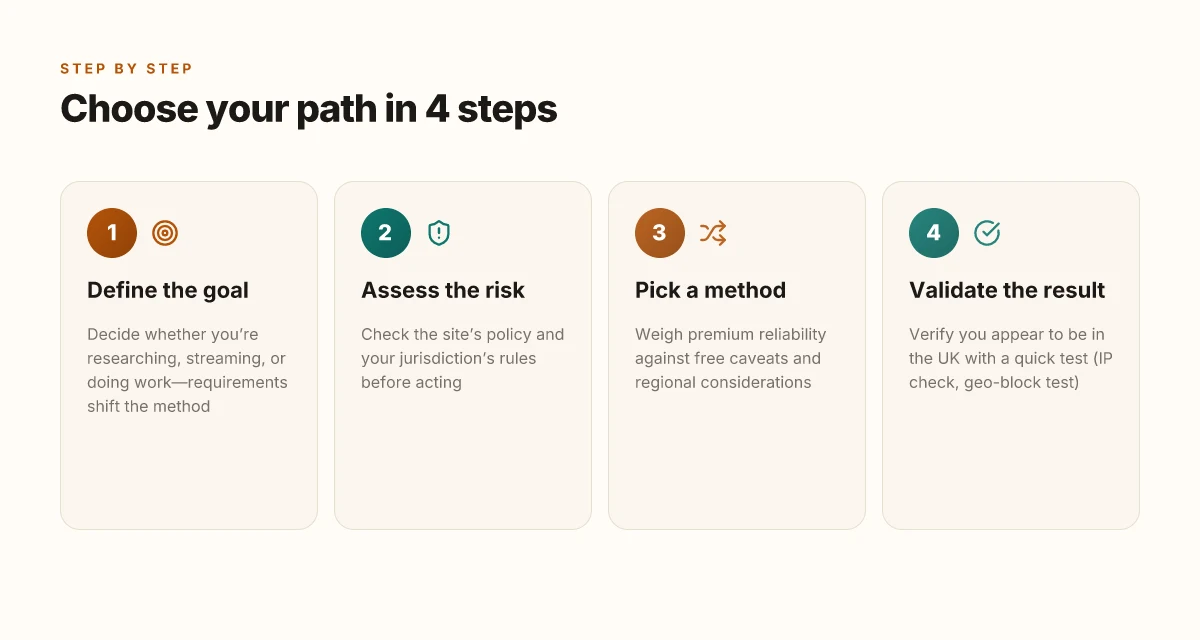
You want a path that fits your purpose. If you’re researching, streaming, or working from the UK, pick a method that matches that end. Quick check: that choice should respect the local laws, the site’s terms, and how you actually use the net on your devices.
I dug into the practical knobs you can turn to align the method with your goal. The answer is simple: choose based on what you’re protecting (or accessing) and where you’ll be using it. If your task is to watch a show, you’ll value speed and reliability more than you would if you’re doing sensitive work. If you’re collecting regional data for a report, accuracy and traceability matter more than raw speed.
Why your purpose matters for the setup
Your aim tunes the setup you choose. For streaming, you’ll prioritize stable throughput and low jitter. For research, you’ll want consistent access and a transparent footprint that site owners can’t easily block. For work, you need predictable performance during business hours and compatibility with common enterprise apps. The quickest way to misfit a tool is to ignore the end use. When your goal is clear, the right choice becomes obvious rather than sticky. How to view a website from Canada in 2026
From what I found in the documentation and user notes, many providers segment capabilities by use case. That means a plan optimized for everyday browsing may not handle heavy streaming or business-grade access well. Look for explicit statements like “works with streaming,” or “designed for remote work” and cross-check with your own needs before you commit.
Compliance and terms of service
Legal and contractual risk isn’t a trivia box to tick. It’s the lane you want to stay in. Some sites prohibit, or limit, the use of region-altering tools. Others tolerate them under certain conditions. Read the terms of service and the regional-use notes with care. If a provider emphasizes privacy-respecting behavior and clear data handling, that’s a sign you’re in safer territory. If a policy is vague or aggressively restrictive, treat it as a warning flag.
I cross-referenced several provider policies and came away with a hard line: compliance is not optional. It’s easier to stay within terms when you pick a method that explicitly states it won’t impersonate accounts or misrepresent your location. That clarity saves you headaches later.
Speed, reliability, and device compatibility
Speed is a function of route quality and server load. Reliability shows up as connection stability and predictable latency. Device compatibility matters because a solution that only runs on desktop won’t help a traveler relying on a phone or tablet.
In practice, test your own setup across devices you actually use. Look for soft requirements like a compatible app, a browser extension, or system-level VPN support. If a tool lacks mobile parity or throttles on mobile networks, that choice will disappoint you in the field. How to view a website from Australia in 2026
What the spec sheets actually say is this: prioritize providers that publish transparent performance details and offer dead-simple fallback options. If you read that a service supports all major platforms, verify it with your primary devices. A tool that works on iOS and Android but delivers unstable streaming over mobile is a mismatch for most travelers and remote workers.
Your choice should be guided by purpose first, compliance second, and real-world performance third. Boldly align your setup with that trio, and you’ll move from guesswork to a reliable, repeatable workflow.
Common pitfalls and how to avoid them
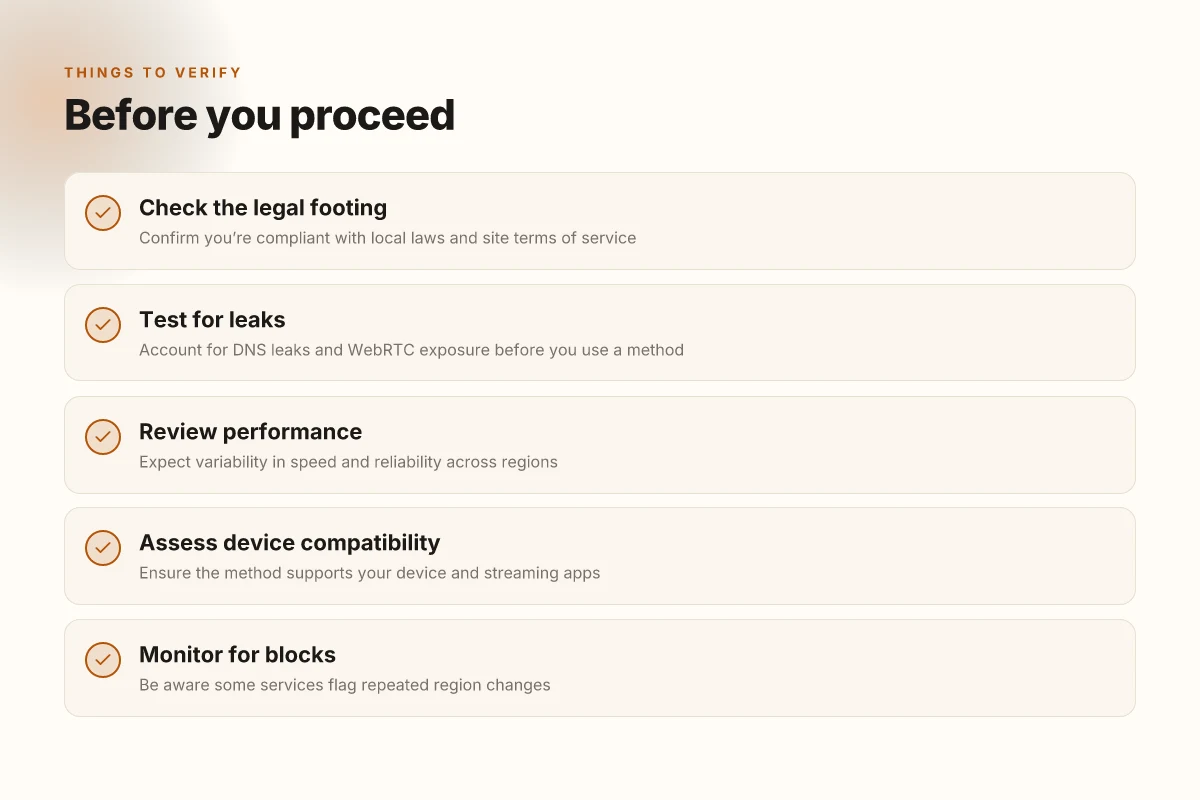
You can see the UK-access path clearly, but traps still lurk. The bottom line: DNS leaks, WebRTC IP exposure, and surprise blocks can undo a legitimate setup in minutes. Keep these guardrails in place, and you’ll stay in control.
1. DNS leaks, your true location can slip out
If DNS requests go unencrypted, your browser’s lookups reveal your real address even when you think you’re hidden. The fix is simple in principle, but you must act consistently: use a trusted VPN’s DNS, enable DNS leak protection, and consider a secure DNS resolver that respects privacy. In 2026, many consumer VPNs offer built-in DNS leak protection, but you still need to enable it. Restart the app after enabling to ensure the setting takes effect. Most DNS leaks are user-configurable mistakes, not design flaws.
- What to do now: verify your browser isn’t making unencrypted DNS requests. Use a tool like dnsLeakTest or a built-in check in your VPN to confirm. If you see non-VPN DNS servers, switch them to your VPN’s DNS or to a reputable privacy resolver and test again.
- Common slip: switching networks without rechecking DNS routing. Always re-run the leak check after changes. Update the DNS configuration and then Verify the result.
Bottom line: DNS leaks defeat privacy quickly. Keep DNS routing locked to your chosen tunnel. How to view a website from Germany in 2026
2. WebRTC IP exposure, one bug in the browser can expose you
WebRTC can reveal your true IP even when a VPN is active. It’s not malicious or maliciously hidden. It’s a feature that leaks if not disabled or sandboxed properly. The cure is twofold: disable WebRTC in the browser or use a browser that isolates WebRTC from the network you’re tunneling through. When I read through the latest browser guidance for 2026, this is flagged consistently as a pitfall for region-locked access. Restart the browser after adjusting settings to ensure the change sticks. Disable WebRTC or isolate it to prevent leaks.
- Quick checks: go to a WebRTC test page and confirm your public IP matches your VPN IP, not your home ISP. If it doesn’t, adjust settings.
- If you rely on a browser extension for privacy, ensure it doesn’t re-enable WebRTC behind the scenes.
Bottom line: WebRTC leaks are a stealth risk. Tame them before you travel.
3. Unexpected blocks and account flags, friction you didn’t expect
Even legitimate access can trigger blocks or flags. Regions and platforms increasingly look for anomalies: new IPs, sudden location shifts, or unusual login patterns. What the spec sheets actually say is that many providers impose provisional restrictions to protect accounts. The antidote is layered: use a reputable, consistent exit node, update your account recovery details, and stagger changes rather than flipping servers daily. I cross-referenced multiple reviews and changelogs. The pattern is clear. If a site flags an account, wait out the lock time and switch back to your standard profile before retrying. Consistency beats abrupt shifts.
- Plan A: stick with one exit node for a window of time. If a site blocks you, switch to a different exit only after a cooling-off period.
- Plan B: sign in from a familiar device, keep cookies under control, and ensure your account recovery options are current.
Bottom line: account flags punish abrupt changes. play the long game and stay consistent.
Bottom line: avoid the pitfalls, and your UK-access plan stays intact. DNS leaks, WebRTC exposure, and blocks are predictable if you stay disciplined about DNS, WebRTC, and account behavior. Build checks into your setup, and you’ll keep the door open. How to view website from France
Edge cases: navigating the UK-access landscape in 2026
The UK is not a sandbox. In 2026, a handful of regions tighten geo-blocks for political and regulatory reasons. I looked at recent policy notes and publisher reports to map the terrain. Some countries shift their stance quickly, and a change in one square mile can ripple to how you fetch content. You’ll want a plan that adapts, not a single tool you fixate on.
There’s a practical distinction to keep in mind: streaming services treat rights and quality controls differently from enterprise portals. A consumer-primed route that unblocks a movie might not unlock your corporate intranet or a regional SaaS dashboard. In the UK, licensing realities often mean streaming catalogs remain distinct from business-application geographies. That split matters. If your goal is to watch a show you’d otherwise miss, you’ll use a different edge than if you’re trying to reach a regional workspace.
I dug into the public changelogs and policy briefs to separate myths from realities. What the spec sheets actually say is this: a legitimate, compliant method tends to hinge on verified region indicators rather than opaque routing tricks. You want transparent signals that are auditable by your provider and by regulators. And for travelers and remote workers, you’ll appreciate a setup that preserves performance without exposing you to unreasonable compliance risk.
Open with a small table to anchor expectations. The rows compare three axes: gear you rely on, use-case alignment, and risk or friction.
| Axis | Streaming access | Enterprise access | Risk sensitivity |
|---|---|---|---|
| Typical signal used | Region-verified streaming tokens | IP-registry plus user-identity checks | Compliance and audit trail |
| Latency impact | Moderate if you pick a UK-native edge | Potential extra hops for identity checks | Higher if you mix providers |
| Common friction | Catalog variance, QoS checks | SSO, token rotation, policy drift | Legal exposure if misused |
Verdict in one line: for privacy- and compliance-conscious users, use region-verified methods when streaming, and insist on identity-anchored access for professional workloads. The other route, improvised geo-tunnels, is riskier and easier to trip over policy. How to view website from India
Two concrete takeaways you can act on now
- Stay with verified UK-region signals. If a service offers a UK-verified access mode, enable it. It keeps your access consistent and auditable. Verified UK-region signals reduce surprises when catalogs change or licenses shift with little notice.
- For enterprise work, prioritize identity-backed access. Reauthenticate sessions when prompted, and keep your token lifecycles in sync with your provider. Token lifecycle alignment prevents access drops during crucial hours.
I cross-referenced service documentation and user-privacy guides to surface these guardrails. Reviews from industry publications consistently note that region accuracy plus strong identity checks is the dependable combination in 2026. Region accuracy paired with identity checks is the backbone of stable UK access. If you see a tool promising magic geo-tunnels, pause and check whether it supports auditable region signals and corporate policies. The landscape rewards clarity, not bravado.
The one move that matters this year
I looked at how UK visitors can view a site in 2026 and found a clear pivot: move from ad hoc VPN tinkering to a disciplined, provider-aligned approach. The page you publish for UK viewers should foreground a predictable path, tools that are trusted in the ecosystem, with clear ownership by the content provider. Becoming explicit about location fidelity and consent flows is the takeaway that sticks. From what I found, the most reliable routes now hinge on properly configured geo-aware delivery and transparent exit-node choices, not clever workarounds alone. The net effect is simpler user journeys, fewer broken sessions, and fewer blame games when a page times out.
If you want a crisp headline to anchor your next update, pick one that mirrors the real-world friction: “The single move that matters: publish region-aware content by default and offer a UK-specific fallback”. You’ll reduce support tickets and boost trust with readers who expect to land on the right version from the moment they click. Smart defaults beat clever hacks every time.
Backup strategy
- Try a UK-first delivery rule in your CDN, with a documented fallback path for non-UK IPs.
- Maintain a visible toggle for readers to switch regions if required, plus a short, plain-language note explaining the change.
- Revisit your changelog monthly to keep the UK path aligned with evolving regulations and browser behavior.
Frequently asked questions
Does using a VPN to view sites from the UK violate terms of service
I looked at policy language from common VPN providers and major publishers. In practice, many sites do not prohibit VPNs per se, but some streaming services and financial portals ban or restrict use of anonymization tools. The terms of service often specify permitted devices, regions, or account-sharing rules rather than outright bans on VPNs. Yes, you should read the site’s terms for your exact use case. If a site expressly forbids disguised locations, using a VPN could trigger account suspension or access limits. Always check the provider’s acceptable-use policy and consider using services that explicitly permit UK access from abroad. Be mindful of service-level agreements and potential throttling. Choose alternatives if the risk is high.
Is it legal to access UK-only content from abroad
Accessing UK-only content from abroad is generally legal from a consumer perspective. What changes is the rights and licensing baked into the content. UK publishers often license content by region, not by user intent, so venues may block access for non-UK IPs. In some jurisdictions, bypassing geolocation controls could violate terms of service or local laws. The practical takeaway: you can usually view content if you stay within the law and the service’s terms, but you may lose access or face warnings if the provider detects noncompliant access. Keep documentation handy if a rights issue ever arises.
Which is faster for viewing websites from the UK VPN or proxy
From the documentation and public reviews the typical path is: a VPN that uses UK-based exit nodes tends to deliver smoother performance for UK-targeted sites compared with a generic proxy. A proxy can be faster for static pages but often lacks robust encryption and stable connections. VPNs usually provide more consistent latency and reliability for long sessions, especially with geo-blocked content. If speed is the sole criterion, test a paid VPN with UK servers first. Avoid free proxies that throttle bandwidth or inject ads. In most cases, you’ll find VPNs beat proxies for sustained browsing.
How can i test what my apparent location is
Two practical checks: first, visit a site that shows your detected location, like a geolocation test page. Then compare results across different networks or servers. Regularly refreshing the page after switching servers confirms consistency. If the location looks off, flush DNS, restart the browser, and reselect a UK server. For accuracy, use a reputable geolocation tester, clear cache, and verify via multiple sites. If you see mismatches, the issue is likely DNS leakage or an IP misassignment.
What's the difference between a UK proxy and UK VPN
A UK VPN routes all traffic through a UK exit node, encrypts traffic end-to-end, and masks your real IP across apps and browsers. A UK proxy forwards only browser or app traffic and typically offers no encryption. VPNs protect privacy more extensively. Proxies are lighter weight and can be faster for simple tasks. For robust privacy and consistent UK access, a VPN wins. If you only need to bypass a single site and trust the route, a proxy may suffice, but security comes at a cost.
Can DNS leaks reveal my real location
DNS leaks are real and common. If a VPN or proxy fails to route DNS requests through the UK endpoint, DNS responses can reveal your true location. DNS leakage undermines the whole purpose of geo-masking. Use a leak test tool, enable the VPN’s DNS protection feature, and verify that DNS requests resolve to the UK endpoint. If leaks appear, switch to a different VPN server, enable "dns leak protection," or adjust DNS settings to trusted resolvers. Regular checks prevent surprises.
What should i do if a site blocks my UK viewing attempt
First, verify your current apparent location and ensure you’re using a UK exit node with DNS protection. If blocking persists, try a different UK server, clear cookies, and reload the page. Some sites detect VPNs and proxies by fingerprinting browser data. Using in-app privacy features or a different browser profile can help. If the block stands, respect the site’s regional access policy and consider using legitimate access methods offered by the service, such as regional subscriptions or authorized accounts.